Wednesday, February 20, 2013

DASH diet: Healthy eating to lower your blood pressure - Mayo Clinic

DASH diet: Healthy eating to lower your blood pressure


The DASH diet emphasizes portion size, eating a variety of foods and getting the right amount of nutrients. Discover how DASH can improve your health and lower your blood pressure.

 By Mayo Clinic staff


DASH stands for Dietary Approaches to Stop Hypertension. The DASH diet is a lifelong approach to healthy eating that's designed to help treat or prevent high blood pressure (hypertension). The DASH diet encourages you to reduce the sodium in your diet and eat a variety of foods rich in nutrients that help lower blood pressure, such as potassium, calcium and magnesium.

By following the DASH diet, you may be able to reduce your blood pressure by a few points in just two weeks. Over time, your blood pressure could drop by eight to 14 points, which can make a significant difference in your health risks.

Because the DASH diet is a healthy way of eating, it offers health benefits besides just lowering blood pressure. The DASH diet may offer protection against osteoporosis, cancer, heart disease, stroke and diabetes. And while the DASH diet is not a weight-loss program, you may indeed lose unwanted pounds because it can help guide you toward healthier meals and snacks.

DASH diet: Sodium levels


A key goal of the DASH diet is reducing how much sodium you eat, since sodium can dramatically increase blood pressure in people who are sensitive to its effects. In addition to the standard DASH diet, there is also a lower sodium version of the diet. You can choose the version of the diet that meets your health needs:
  • Standard DASH diet. You can consume up to 2,300 milligrams (mg) of sodium a day.
  • Lower sodium DASH diet. You can consume up to 1,500 mg of sodium a day.

Both versions of the DASH diet aim to reduce the amount of sodium in your diet compared with what you might get in a more traditional diet, which can amount to a whopping 3,500 mg of sodium a day or more. That level is far beyond the recommendation of the 2005 Dietary Guidelines for Americans of a maximum of 2,300 mg of sodium a day.
Studies show that the lower sodium version of the DASH diet is especially helpful in lowering blood pressure for adults who are middle-aged or older, for African-Americans and for those who already have high blood pressure. If you aren't sure which version of the DASH diet is best for you, talk to your doctor.

DASH diet: What to eat


Both sodium versions of the DASH diet include lots of whole grains, fruits, vegetables and low-fat dairy products. The DASH diet also includes some fish, poultry and legumes. You can eat red meat, sweets and fats in small amounts. The DASH diet is low in saturated fat, cholesterol and total fat.
Here's a look at the recommended servings from each food group for the 2,000-calorie-a-day DASH diet.

Grains (6 to 8 servings a day)Grains include bread, cereal, rice and pasta. Examples of one serving of grains include 1 slice whole-wheat bread, 1 ounce (oz.) dry cereal, or 1/2 cup cooked cereal, rice or pasta.
  • Focus on whole grains because they have more fiber and nutrients than do refined grains. For instance, use brown rice instead of white rice, whole-wheat pasta instead of regular pasta and whole-grain bread instead of white bread. Look for products labeled "100 percent whole grain" or "100 percent whole wheat."
  • Grains are naturally low in fat, so avoid spreading on butter or adding cream and cheese sauces.

Vegetables (4 to 5 servings a day)

Tomatoes, carrots, broccoli, sweet potatoes, greens and other vegetables are full of fiber, vitamins, and such minerals as potassium and magnesium. Examples of one serving include 1 cup raw leafy green vegetables or 1/2 cup cut-up raw or cooked vegetables.
  • Don't think of vegetables only as side dishes — a hearty blend of vegetables served over brown rice or whole-wheat noodles can serve as the main dish for a meal.
  • Fresh or frozen vegetables are both good choices. When buying frozen and canned vegetables, choose those labeled as low sodium or without added salt.
  • To increase the number of servings you fit in daily, be creative. In a stir-fry, for instance, cut the amount of meat in half and double up on the vegetables.

Fruits (4 to 5 servings a day)

Many fruits need little preparation to become a healthy part of a meal or snack. Like vegetables, they're packed with fiber, potassium and magnesium and are typically low in fat — exceptions include avocados and coconuts. Examples of one serving include 1 medium fruit or 1/2 cup fresh, frozen or canned fruit.
  • Have a piece of fruit with meals and one as a snack, then round out your day with a dessert of fresh fruits topped with a splash of low-fat yogurt.
  • Leave on edible peels whenever possible. The peels of apples, pears and most fruits with pits add interesting texture to recipes and contain healthy nutrients and fiber.
  • Remember that citrus fruits and juice, such as grapefruit, can interact with certain medications, so check with your doctor or pharmacist to see if they're OK for you.

Dairy (2 to 3 servings a day)

Milk, yogurt, cheese and other dairy products are major sources of calcium, vitamin D and protein. But the key is to make sure that you choose dairy products that are low-fat or fat-free because otherwise they can be a major source of fat. Examples of one serving include 1 cup skim or 1% milk, 1 cup yogurt or 1 1/2 oz. cheese.
  • Low-fat or fat-free frozen yogurt can help you boost the amount of dairy products you eat while offering a sweet treat. Add fruit for a healthy twist.
  • If you have trouble digesting dairy products, choose lactose-free products or consider taking an over-the-counter product that contains the enzyme lactase, which can reduce or prevent the symptoms of lactose intolerance.
  • Go easy on regular and even fat-free cheeses because they are typically high in sodium.

Lean meat, poultry and fish (6 or fewer servings a day)

Meat can be a rich source of protein, B vitamins, iron and zinc. But because even lean varieties contain fat and cholesterol, don't make them a mainstay of your diet — cut back typical meat portions by one-third or one-half and pile on the vegetables instead. Examples of one serving include 1 oz. cooked skinless poultry, seafood or lean meat, 1 egg, or 1 oz. water-packed, no-salt-added canned tuna.
  • Trim away skin and fat from meat and then broil, grill, roast or poach instead of frying.
  • Eat heart-healthy fish, such as salmon, herring and tuna. These types of fish are high in omega-3 fatty acids, which can help lower your total cholesterol.

Nuts, seeds and legumes (4 to 5 servings a week)

Almonds, sunflower seeds, kidney beans, peas, lentils and other foods in this family are good sources of magnesium, potassium and protein. They're also full of fiber and phytochemicals, which are plant compounds that may protect against some cancers and cardiovascular disease. Serving sizes are small and are intended to be consumed weekly because these foods are high in calories. Examples of one serving include 1/3 cup (1 1/2 oz.) nuts, 2 tablespoons seeds or 1/2 cup cooked beans or peas.
  • Nuts sometimes get a bad rap because of their fat content, but they contain healthy types of fat — monounsaturated fat and omega-3 fatty acids. They're high in calories, however, so eat them in moderation. Try adding them to stir-fries, salads or cereals.
  • Soybean-based products, such as tofu and tempeh, can be a good alternative to meat because they contain all of the amino acids your body needs to make a complete protein, just like meat. They also contain isoflavones, a type of natural plant compound (phytochemical) that has been shown to have some health benefits.

Fats and oils (2 to 3 servings a day)

Fat helps your body absorb essential vitamins and helps your body's immune system. But too much fat increases your risk of heart disease, diabetes and obesity. The DASH diet strives for a healthy balance by providing 30 percent or less of daily calories from fat, with a focus on the healthier unsaturated fats. Examples of one serving include 1 teaspoon soft margarine, 1 tablespoon low-fat mayonnaise or 2 tablespoons light salad dressing.
  • Saturated fat and trans fat are the main dietary culprits in raising your blood cholesterol and increasing your risk of coronary artery disease. DASH helps keep your daily saturated fat to less than 10 percent of your total calories by limiting use of meat, butter, cheese, whole milk, cream and eggs in your diet, along with foods made from lard, solid shortenings, and palm and coconut oils.
  • Avoid trans fat, commonly found in such processed foods as crackers, baked goods and fried items.
  • Read food labels on margarine and salad dressing so that you can choose those that are lowest in saturated fat and free of trans fat.

Sweets (5 or fewer a week)

You don't have to banish sweets entirely while following the DASH diet — just go easy on them. Examples of one serving include 1 tablespoon sugar, jelly or jam, 1/2 cup sorbet or 1 cup (8 oz.) lemonade.
  • When you eat sweets, choose those that are fat-free or low-fat, such as sorbets, fruit ices, jelly beans, hard candy, graham crackers or low-fat cookies.
  • Artificial sweeteners such as aspartame (NutraSweet, Equal) and sucralose (Splenda) may help satisfy your sweet tooth while sparing the sugar. But remember that you still must use them sensibly. It's OK to swap a diet cola for a regular cola, but not in place of a more nutritious beverage such as low-fat milk or even plain water.
  • Cut back on added sugar, which has no nutritional value but can pack on calories.

DASH diet: Alcohol and caffeine


Drinking too much alcohol can increase blood pressure. The DASH diet recommends that men limit alcohol to two or fewer drinks a day and women one or less.

The DASH diet doesn't address caffeine consumption. The influence of caffeine on blood pressure remains unclear. But caffeine can cause your blood pressure to rise at least temporarily. If you already have high blood pressure or if you think caffeine is affecting your blood pressure, talk to your doctor about your caffeine consumption.

DASH diet and weight loss


The DASH diet is not designed to promote weight loss, but it can be used as part of an overall weight-loss strategy. The DASH diet is based on a diet of about 2,000 calories a day. If you're trying to lose weight, though, you may want to eat around 1,600 a day. You may need to adjust your serving goals based on your health or individual circumstances — something your health care team can help you decide.

Tips to cut back on sodium


The foods at the core of the DASH diet are naturally low in sodium. So just by following the DASH diet, you're likely to reduce your sodium intake. You also can cut back on sodium in your diet by:
  • Using sodium-free spices or flavorings with your food instead of salt
  • Not adding salt when cooking rice, pasta or hot cereal
  • Rinsing canned foods to remove some of the sodium
  • Buying foods labeled "no salt added," "sodium-free," "low sodium" or "very low sodium"
One teaspoon of table salt has about 2,300 mg of sodium, and 2/3 teaspoon of table salt has about 1,500 mg of sodium. When you read food labels, you may be surprised at just how much sodium some processed foods contain. Even low-fat soups, canned vegetables, ready-to-eat cereals and sliced turkey from the local deli — all foods you may have considered healthy — often have lots of sodium.
You may not notice a difference in taste when you choose low-sodium food and beverages. If things seem too bland, gradually introduce low-sodium foods and cut back on table salt until you reach your sodium goal. That'll give your palate time to adjust. It can take several weeks for your taste buds to get used to less salty foods.

Putting the pieces of the DASH diet together


Try these strategies to get started on the DASH diet:
  • Change gradually. To boost your success, avoid dramatic changes in your eating approach. Instead, change one or two things at a time. If you now eat only one or two servings of fruits or vegetables a day, try to add a serving at lunch and one at dinner. Rather than switching to all whole grains, start by making one or two of your grain servings whole grains. Increasing fruits, vegetables and whole grains gradually can also help prevent bloating or diarrhea that may occur if you aren't used to eating a diet with lots of fiber. You can also try over-the-counter products to help reduce gas from beans and vegetables.
  • Forgive yourself if you backslide. Everyone slips, especially when learning something new. Remember that changing your lifestyle is a long-term process. Find out what triggered your setback and then just pick up where you left off with the DASH diet.
  • Reward successes. Reward yourself with a nonfood treat for your accomplishments.
  • Add physical activity. To boost your blood pressure lowering efforts even more, consider increasing your physical activity in addition to following the DASH diet. Combining both the DASH diet and physical activity makes it more likely that you'll reduce your blood pressure.
  • Get support if you need it. If you're having trouble sticking to your diet, talk to your doctor or dietitian about it. You might get some tips that will help you stick to the DASH diet.
Remember, healthy eating isn't an all-or-nothing proposition. What's most important is that, on average, you eat healthier foods with plenty of variety — both to keep your diet nutritious and to avoid boredom or extremes. And with the DASH diet, you can have both.


http://www.mayoclinic.com/health/dash-diet/HI00047/NSECTIONGROUP=2
 

Monday, February 18, 2013

How to Remove Toxins From Your Feet - eHow.com

How to Remove Toxins From Your Feet


How to Remove Toxins From Your Feet thumbnail

No matter what preventative measures you take, your body will come into contact with harmful toxins every day. Toxins are found in the food we eat and the air we breathe, as a result of pesticides, household chemicals, pet dander, secondhand smoke and other pollutants. Regular detoxification removes these toxins from your body and help to improve your immune system. The liver and kidneys are the body's main organs that work to rid the body of toxins. Toxins are also released through the skin by sweating. There are a few steps you can take to remove toxins from your feet.
 

Things You'll Need


  •  Dry brush or exfoliating loofah
  • One-gallon hot water
  •  One-cup epsom salt


Instructions

  • 1.  Brush your feet vigorously with a dry brush or loofah, using a circular motion to stimulate the skin and promote the release of toxins, then take a shower to wash away the toxins. Dry brushing is a Russian technique that helps to remove dead skin, promote cellular growth, improve the nervous system and clean the lymphatic system.
  • 2.  Soak your feet in a solution of one-gallon hot water and one-cup of epsom salt to promote sweat and draw out toxins from your feet. Hot water will induce sweating and the magnesium in epsom salts are believed to be absorbed into the skin to aid in circulation, while simultaneously drawing out toxins through the skin.
  • 3.  Wrap your feet in wet seaweed or soak in a foot bath with hot water and seaweed; you can also purchase an at-home seaweed mask to apply to your feet. The hot water will help you to sweat out toxins, while seaweed has long been associated with the ability to draw toxins from the body.
  • 4.  Apply a green tea and vinegar foot detoxification pad to the bottom of each foot, leave them on overnight and remove in the mornings. Although still under debate, this Chinese foot detoxification is supposed to draw the toxins out through your feet, revealing a black pad in the morning.
  

Tips & Warnings

Use a combination of these methods to improve your detox results.


Read more: How to Remove Toxins From Your Feet | eHow.com http://www.ehow.com/how_7424819_remove-toxins-feet.html#ixzz2KqONN1CN

Sunday, February 17, 2013

Learn how to go on a 7-day detox diet - eHow.com

The Detox Diet

Learn how to go on a 7-day detox diet

By , About.com Guide
Updated December 03, 2012
About.com Health's Disease and Condition content is reviewed by our Medical Review Board

The most common type of detox diet is a food-based detox. Many popular detox diets, such as the Clean Cleanse (popularized by Gwyneth Paltrow), are based on similar guidelines. Total food intake isn't restricted, but many foods are off-limits, such as dairy, wheat, gluten-containing foods, sugar, fried foods and processed foods. It also calls for plenty of fresh vegetables and fruit and anti-inflammatory foods.


Take the Detox Diet Quiz


Before finding out more about what the diet entails, become familiar with the possible symptoms of toxicity by taking the Detox Screening Quiz.


What to Eat on the 7-Day Detox Diet


1) What to Eat Before the Diet - Certain foods and drinks, such as coffee and sugar, should be phased out before starting the diet in order to avoid headaches and other reactions. Find out how to prepare for a detox.

2) Foods to Eat - Here is a list of foods to eat during a 7-day detox diet.

3) Foods to Avoid - A list of foods to exclude on a 7-day detox diet.

4) Sample Menu Plan - Although meals made from any of the allowed detox foods are okay, it helps to have a sample menu plan with ideas on what to make.

5) Top 20 Detox Foods - Want to know what some of the star players of the diet are? Find out our top 20 detox foods and get tips on how to use them.

The 7-day food-based detox diet is designed for a newbie, for someone who wants to do a longer cleanse (7 to 21 days), for people who aren't able to go on a more restrictive diet due to time or work constraints, or for people who are generally exhausted and require more protein in their diet (take the adrenal fatigue quiz). While the plan outlined here is for 7 days, it may be followed for up to 21 days.

There are many types of detox diets, from juice fasts to detoxes that allow three meals per day. While it may be tempting to make a drastic change by trying a fast, sometimes simple changes such as drinking more fluids, eating more vegetables, or eliminating wheat can have a profound effect on how we feel. The key is to choose the diet that best matches a person’s health, energy level, and lifestyle.


Other Steps to a Detox Diet Plan


Diet is just one component of any well-designed detox diet. In addition with an eating plan, there are other important steps:

1) Enhance Circulation

A lack of physical activity can result in poor circulation of blood and lymph fluid, which can have a negative effect on health and impair detoxification and immune function. The best way to get blood flowing is to exercise. Contrast showers and dry skin brushing are also great because they can be integrated into your regular shower.

2) Promote Elimination

When toxins that are stored in our cells are mobilized, they travel to our blood and must be eliminated from the body through feces, urine, or sweat or they can be reabsorbed and recirculated in our systems. Sometimes our organs of elimination are sluggish because we don’t move (and therefore don’t sweat), are constipation, or don’t drink enough water. Ways to increase elimination include: foods that prevent constipation, herbal laxatives such as senna tea or cascara, increased fluid intake, colonics, or enemas.

3) Improve Digestion

Promote the growth of beneficial bacteria in the intestines, so that it can keep potentially harmful bacteria in check, otherwise “bad” bacteria can produce toxins that damage the intestinal lining, are absorbed into the bloodstream, and injure cell membranes in the body. The detox diet can often provide the nutrients needed to promote the growth of beneficial bacteria. Probiotics can also be supplemented.

Most detox diets call for the removal of foods people are often sensitive to, such as wheat and gluten. A properly chosen diet supports the liver by providing it with protein, antioxidants, vitamin, and other nutrients so that it can detoxify efficiently. Supplements can also be taken, such as protein powder and vitamins, antioxidants, herbs for the liver, or detox teas.

4) Mind/Body Wellness

Stress can impair the body’s detoxification systems and lead to digestive ailments, impaired immunity, and have wide-ranging effects on health. A detox diet is a time not just to let the body heal, but to allow the mind to rest. Try to incorporate mind/body practices into your detox, such as diaphragmatic breathing, progressive muscle relaxation, or mindfulness meditation.


Common Questions

Here are the answers to some of the more commonly asked questions about the diet.


Additional Resources


http://altmedicine.about.com/cs/dietarytherapy/a/Detox_Diet_Plan.htm

Friday, February 15, 2013

The Quadratus Lumborum Trigger Points: Masters of Low Back Pain - Trigger Point Therapist

The Quadratus Lumborum Trigger Points: Masters of Low Back Pain

Banner Pic for "Quadratus Lumborum Trigger Points"

Bow Down to the Masters of Low Back Pain

Nothing gets a person on their “hands and knees” quicker than active trigger points in the quadratus lumborum muscle. These trigger points are always on the top of my list when it comes to acute low back pain complaints, especially those cases where the pain is so severe that the client cannot stand.
The quadratus lumborum (QL) trigger points also play a prominent role in chronic low back pain cases as well, becoming a key player in the subsequent onset of sciatica symptoms and hip pain complications.

The QL trigger points are indeed the “masters of low back pain”, and if you are looking to become their master, there are some important things that you need to know.
 

The Quadratus Lumborum Muscle

The quadratus lumborum muscle group is not going to impress you with its size or prominence in the physique. But this small and somewhat hidden muscle group plays such a prominent role in normal body mechanics that without its functioning the upright posture of the human being is impossible to maintain.

Anatomical Highlights: To begin, I found this great video clip of from the Trail Guide to the Body DVD on youtube that I want to show you:

(In case you can’t view the video in this post, you can watch it on youtube here: http://youtu.be/VsW896n71HU)

The video above does a fantastic job at showing the position of the muscle group, but there is one more detail that I would like to highlight; this muscle group has three subsections that each have a distinct fiber direction:
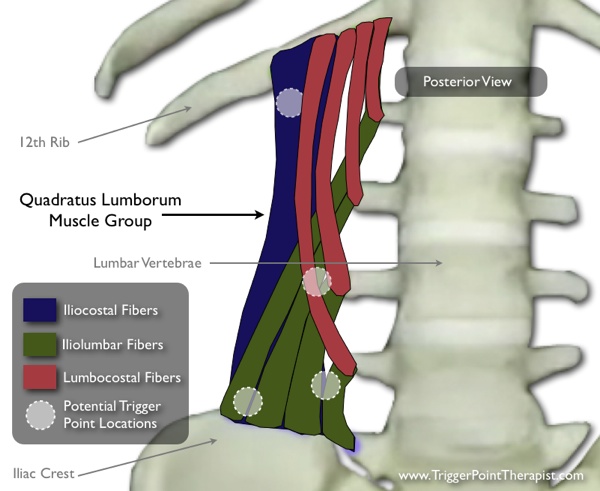
  • The Iliocostal fibers (shown below in blue) attach on the Iliac Crest and run vertically upward to attach to the 12th rib.
  • The iliolumbar fibers (shown below in green) attach on the Iliac Crest and run diagonally upward and medially to attach to the tranverse processes of the lumbar vertebrae (L1 > L4)
  • The lumbocostal fibers (shown below in red) attach on the lumbar vertebrae and run diagnonally upward and laterally to attach to the twelfth (lowest) rib.

Diagram of the "Quadtraus Lumborum Muscle Fibers and Trigger Points"

As you can see in the diagram above, the diagonal iliolumbar and lumbocostal fibers are oriented to allow them to act as guy-wires for the lumbar spine. It is this particular anatomical feature that accounts for this muscle’s ability to stabilize the upright posture.

Biomechanical Highlights: The most important biomechanical consideration with the QL muscle relates to the guy-wire fiber arrangement discussed above. The primary antagonist to each QL muscle is the opposing QL muscle on the other side of the body. Thus, if one muscle develops trigger point activity, the muscle on the other side will become overloaded and develop trigger points as well.

From a clinical perspective, this means that the therapist should always address the trigger points in both the left and right QL muscles, even if the pain is limited only to one side.

The Quadratus Lumborum Trigger Points

As shown in the diagram above, there are four potential trigger points in the QL muscle:
  • The upper QL trigger point is found just lateral to where the lumbar paraspinal muscles and the twelfth rib meet. Note, this trigger point lies underneath the paraspinal muscle mass in this region, so the therapist must approach it from the side to contact it directly.
  • The lower QL trigger point lies deep in the region where the paraspinal muscles meet the hip crest (iliac crest).
  • The middle or deep QL trigger points lie closer to the spine than the superior or lower trigger points, next to the third and fourth lumbar vertebrae.
Typically, I find all four trigger points in this muscle present simultaneously. Accurately locating (and treating) these trigger points requires positioning the client in a specific way, which I will describe in the treatment section below.

Quadratus Lumborum Pain

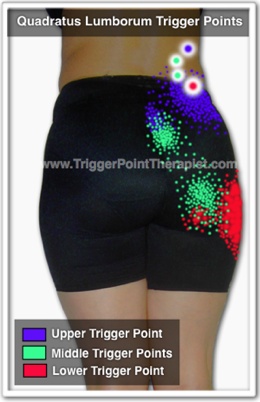
Picture of "Quadtratus Lumborum Pain and Trigger Points"

The referred pain from the QL trigger points is usually described as an intense, deep ache, but it may also have a sharp, knifelike quality at times, particularly during movement. The distribution of the referred pain is as follows:
  • The upper trigger point (shown to right in blue) refers pain to the flank region of the low back, along the crest of the hip, and around the front to the upper groin region. It may also refer pain to the Sacro-Iliac (S.I.) joint, and to the scrotum and testicles on occasion.
  • The lower trigger point (shown to right in red) refers pain and tenderness to the hip joint region, making laying on that side too painful during sleep.
  • The middle trigger points (shown above in green) refer pain and tenderness strongly to the S.I. joint and lower buttock regions. Occasionally, these trigger points may refer a sharp, “lightening bolt” of pain to the front of the thigh.

Quadratus Lumborum Symptoms & Findings

The signs and symptoms associated with active quadratus lumborum trigger points are as follows:
  • Severe, deep, aching low back pain during movement or rest, and in nearly any position, but worse in the upright posture of standing or sitting.
  • A sharp, knifelike pain when moving the hips/pelvis is common.
  • Client’s will attempt to support and stabilize their upper body with their hands. This bracing with the hands occurs during walking and sitting, and is the hallmark sign of active QL trigger points.
  • Coughing and sneezing can creating episodes of agonizing pain as the muscle contracts to stabilize the rib cage.
  • Clients may be forced to crawl on their hands and knees to the bathroom when getting out of bed in the morning.
  • Clients will be unable to roll to either side when laying in a face-up position.
  • The pain from untreated QL trigger points may progress to involve the groin, genitalia, and sciatica symptoms.
  • The low back pain from QL trigger points may also transform into severe hip pain over time that resembles trochanteric bursitis.
  • A common postural distortion with QL trigger points is an elevated hip crest on the painful side.


What Causes Quadratus Lumborum Trigger Points?

The following factors may activate or reactivate trigger points in the QL muscle:
  • Any activity that involves bending and twisting at the waist, such as reaching for an object on the floor, can overload the QL muscle.
  • Lifting heavy or awkward objects, such as a TV, especially if it involves twisting at the waist.
  • Bending over to put on pants, especially if their foot becomes entangled in the pants and they lose their balance.
  • Automobile accidents.
  • A genetically short leg that causes a lateral tilt in pelvis, or walking or running on a sloping surface (side of the road), may predispose the QL muscles to overload and trigger point activity.
  • A soft bed that sags like a hammock, or a Tempurpedic mattress, may activate or reactivate QL trigger points by placing the muscle in a shortened or stretched position for an extended period.
(For more information on the various causes of trigger points, please see What Causes Trigger Points.)


Treatment of Quadratus Lumborum Trigger Points

The first step in the effective treatment of the QL trigger points is being able to accurately locate and contact the trigger points. Many therapists make the mistake of trying to locate and treat these trigger points with the client in the prone (face-down) position, as you can see in the following videos:


(YouTube link > http://youtu.be/v0wurbGLgpo )


(YouTube link > http://youtu.be/bTJtTuJmJaI )


(YouTube link > http://youtu.be/PwKm9KpE5Wc )

Because three of the four potential QL trigger points lie underneath the paraspinal muscles, the therapist will have difficulty contacting these trigger points with the client in the prone position.
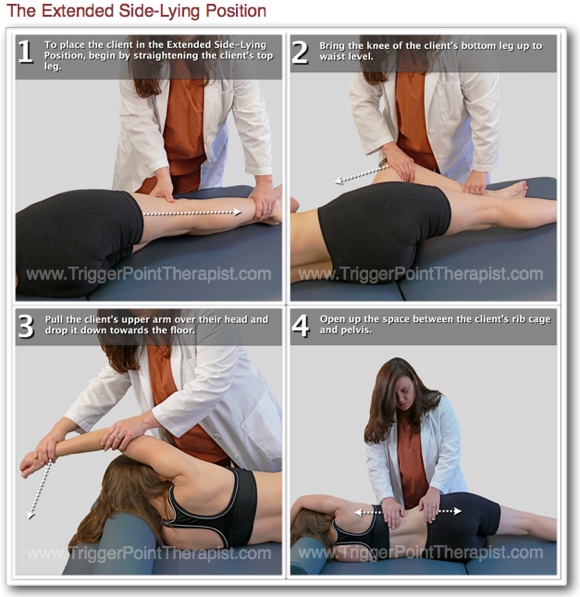
A more effective approach to these trigger points can be achieved by placing the client on their side, with the painful side facing up. This position is called the extended side-lying position and is used specifically to address the trigger points in the QL muscle.

Placing the Client in the Extended Side-Lying Position

  • The first thing that you should recognize as a therapist is that a client with active QL trigger points is going to need some help getting into and changing position on your treatment table.
  • I usually start by helping the client sit on the midpoint of table with their legs hanging off one side.
  • If you are going to work the trigger points in the client’s right QL muscle, for example, you should have them sit on the right side of the table, when viewed from the foot of the table.
  • The client will probably place their hands on the table to each side to support their upper body weight when sitting. If they don’t do this, you should ask them to.
  • Standing in front of the client, you are then going to hug their upper body, to support their upper body weight, and then slowly lay them down on the table on their left side.
  • Then help them place their legs on the table and give them a pillow (or adjust the head piece) to support their neck and head.
  • At this point, the client is in the standard side-lying position and the therapist needs to modify it to place the client’s right QL muscle in a slightly stretched position. To do this, following the steps in the picture below.

Pic of "The Extended Side-Lying Position"
  • When working with acute QL trigger points, the therapist should place a pillow under the client’s right knee after step 1 in the above picture. It is important not to overstretch the muscle at the beginning of the treatment, so supporting the upper knee with a pillow or bolster helps with this. After the trigger points have been released, the therapist should remove or reposition the pillow to allow for a greater stretch of the iliolumbar fibers of the QL muscles.
  • To reposition the client to work the QL muscle on the other side, the therapist can simply reverse these directions to get the client back into the sitting position, being sure to hug and lift the client’s upper body as they sit up, or they can help the client roll to the other side.
  • To roll the client, encircle the client’s waist with your arms and lift their lower trunk slightly off the table as they roll to their back. Then walk around to the other side of the table and repeat the waist lift to help them roll on to their right side. It is critical that the therapist help the client to roll in this manner, otherwise the QL trigger points that were just released will be reactivated by the client’s effort to roll their body.
Using the extended side-lying position helps to apply the appropriate tension to the QL muscle for easier palpation of its trigger points, and allows the therapist easier to access to the trigger points by approaching them from the side, instead of through the paraspinal muscle mass.

Associated Trigger Points

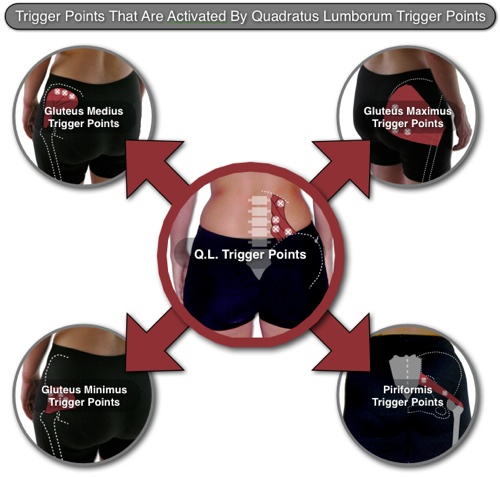
The effective treatment of the QL trigger points will also require the therapist to address the associated trigger points in other muscle groups as well. In acute cases of low back pain, the therapist should include the gluteus medius trigger points in their treatment routine. In chronic cases, the gluteus medius trigger points, gluteus minimus trigger points, gluteus maximus trigger points, and piriformis trigger points will need to be addressed by the therapist.
Diagram of "Quadratus Lumborum Trigger Point Interactions"


The Quadratus Lumborum-Gluteus Medius/Minimus Connection

The referred pain from the upper QL trigger point is projected to the gluteus medius and gluteus minimus muscles, and therefore can activate the trigger points in these muscle groups (termed satellite trigger points).

The relationship between the trigger points in these muscle groups is so strong, that palpation on the QL trigger points can produce the referred pain associated with the gluteus medius and minimus trigger points.

I call this fascinating phenomenon “piggy-backing” and when it occurs with the QL trigger points it often involves the sciatica symptoms (pain that travels down the leg) associated with the gluteus minimus trigger points. Release of the gluteus minimus trigger points restores the typical pain patterns of the QL trigger points.


The Quadratus Lumborum-Gluteus Maximus/Piriformis Connection

Referred pain from the middle or deep QL trigger points may also activate satellite trigger points in the gluteus maximus and piriformis muscles, though the piggy-backing phenomenon doesn’t seem to occur with these trigger points.


The Quadratus Lumborum-IlioPsoas Connection

One other trigger point that can be associated with QL trigger point activity is the trigger point in the IlioPsoas muscle group. Because both of these muscle groups share a similar function, stabilizing the lumbar spine, trigger point induced weakness in one of the muscle groups tends to overload the other muscle group and cause secondary trigger points to develop within it.

For more information on these trigger points, and step-by-step instructions for locating and releasing them, please consider purchasing the Trigger Point Therapy for the Quadratus Lumborum Video Download or if you have an iPad you can purchase the Trigger Point Therapy for the Quadratus Lumborum Booklet for the iPad in the iBookstore.

A link to the video excerpt is provided here: Quadratus Lumborum Pain and Trigger Points


Click here to watch the Quadratus Lumborum Trigger Points Video on YouTube


http://www.triggerpointtherapist.com/blog/quadratus-lumborum-trigger-points/ql-trigger-points-masters-low-back-pain/


*********************************************************************************************************
Here is a very good You Tube video from sanfranciscocrossfit explaining the QL.
-FC

The QL is not a bone
by: sanfranciscocrossfit


Wednesday, February 13, 2013

Dry Mouth - Medicinenet.com

Dry Mouth
(Xerostomia)


What is dry mouth?


Dry mouth, also called xerostomia, is a condition that usually results from decreased production of saliva. At times, xerostomia can make it difficult to speak and may lead to malnutrition. Extreme dry mouth and salivary gland dysfunction can produce significant and permanent mouth and throat disorders and can impair a person's quality of life.

How common is dry mouth?


Xerostomia affects about 10% of all people and is more prevalent in women than men. Disorders of saliva production affect elderly people and those who are taking prescription and nonprescription medications most frequently.


Benefits of saliva

 
Saliva is an essential part of a healthy mouth that is often taken for granted. The lubricating properties of saliva provide comfort and help protect the oral tissues against ulcers, sores, and other effects of friction. Saliva neutralizes acids and provides antibodies against bacterial threat. Saliva helps digest food and helps teeth in the remineralization process. Saliva is also a very essential contributor to a person's ability to taste, as it acts as a solvent for the taste stimuli.

What causes dry mouth?


There are many causes of dry mouth. Xerostomia most commonly occurs as a side effect of many medications, including blood pressure medications, antihistamines, antidepressants, diuretics, nonsteroidal anti-inflammatories, and many others. Other causes of dry mouth are radiation treatments to the head and neck, salivary gland diseases, diabetes, hormonal imbalance, and autoimmune disorders such as Sjögren's syndrome, rheumatoid arthritis, and systemic lupus erythematosus. Salivary production can be decreased if a major salivary duct becomes blocked. Other causative factors include stress, anxiety, depression, and dehydration.


What are the signs and symptoms of dry mouth?

 
People complaining of dry mouth may have trouble speaking, eating, tasting food, and swallowing. Frequently, a dry mouth may be most manifest at night, especially in mouth-breathers. The dryness may cause chapped or cracked lips or cause a persistent cough. They may complain of sores in their mouth, or a white tongue indicative of a fungal infection like yeast (candidiasis). A burning tongue or throat, periodontitis, ulcers, sores, and inflamed soft tissue are also all effects of oral dryness. Without a sufficient quantity of saliva to wash food particles off teeth, neutralize acids in the mouth, and battle the bacteria population, a person frequently develops multiple cavities – especially around the gum line.

What is the treatment for dry mouth?


When dry mouth is noticed, the dentist can be helpful to obtain a proper diagnosis. The diagnosis will help in developing a plan for management and treatment. The person should incorporate a low-sugar diet and begin daily use of fluoride treatments and antimicrobial rinses to combat the effects oral dryness have on the teeth and oral tissues. When selecting a mouthwash, the person must choose a product that doesn't contain alcohol, such as Biotene, for alcohol-based products will only cause further mouth dryness.

The person must drink water more frequently throughout the day, especially while eating. Chewing gum can help stimulate salivary flow, but it is important to remember not to use gum or candies that have sugar in them or the person will be placed at greater risk for developing cavities. Other remedies include medications that help increase salivary flow such as Pilocarpine (Salagen) and Cevimeline (Evoxac). These medications are to be avoided by persons with asthma or glaucoma. Artificial saliva substitutes and oral lubricants containing glycerin will provide help during eating and speaking. They won't cure xerostomia, but will provide some relief.

Since people with dry mouth often develop fungal infections such as oral candidiasis, they may require topical antifungal treatment such as rinses and dissolving tablets. Dentures often harbor fungal infections, so they should be soaked daily in chlorhexidine or 1% bleach.

Can dry mouth be prevented?


There is really no way to prevent dry mouth, only the side effects of dry mouth. It is vital to detect, diagnose and treat xerostomia as early as possible to avoid the devastating effects of dry mouth on dental and overall health.

Dry Mouth Treatment

Do's and Don'ts

Do's
  • Do drink water or sugarless drinks often. That will make chewing and swallowing easier when eating.
  • Do chew sugarless gum or suck on sugarless hard candy to stimulate saliva flow.
  • Do use a humidifier at night to promote moisture in the air while you sleep.
Don'ts
  • Don't consume drinks with caffeine such as coffee, tea, and some sodas. Caffeine can dry out the mouth.
  • Don't use tobacco or alcohol. They dry out the mouth.
SOURCE:
NIH Senior Health


http://www.medicinenet.com/dry_mouth/discussion-557.htm

Tuesday, February 12, 2013

Causes of Foot Cramps - Buzzle.com

Causes of Foot Cramps


Foot cramps shouldn't be very worrisome because they rarely cause a hindrance in our daily routine. However, that instance when one experiences a sudden and forceful cramp can be particularly agonizing due to the abnormal strain the muscles are subjected to.

A lot of us suffer from foot cramps. Our feet bear the maximum body weight and hence feet cramps are more common than any other muscle spasm in the body. The frequency of muscle cramps in foot is more amongst sports persons and the elderly people. Muscular weakness, nutritional deficiency and loss of muscle tone are some of the precipitating factors that can induce foot cramps.

What are foot cramps?

Foot cramps are jerky, involuntary spasms that extend from a few seconds to a few minutes; and can affect a single muscle or a muscle group. The resultant pain is caused because the muscle contracts without effective shortening of the muscle. Also, the spasm might leave the muscle sore even after the cramp is gone. It is also normal, that the cramps recur multiple times till they finally go away.

Which regions of the foot are affected?

Inner arch of the foot and toes of the feet, especially the big toe are more prone to these spasms. Other common regions affected are the thigh and calf muscles. Often you will notice, that muscle cramps cause visible or palpable hardening of the involved muscle.

What are the common causes of foot cramps?


Flat feet or hyperflexible joints.

Sedentary lifestyle leading to obesity and muscle weakness.

Lack of muscle strengthening exercises.

Sudden increase in the intensity of workouts that increase the pressure on foot.

Lower availability of calcium in blood caused by increased breathing during cardio exercises and the like.

Injury caused by repetitive movements.

Old worn-out footwear.

What are the disorders that may cause foot cramps?


Lack of Nutrients

The body experiences foot cramps when it lacks the supply of essential vitamins and minerals. If foot cramps are caused because of nutritional deficiencies, it can be corrected once the body gets the appropriate amount of vitamins. Electrolyte imbalance pertaining to low calcium and potassium levels as well as high magnesium levels are related to spasms. This is because potassium imbalance disturbs the magnesium and calcium metabolism necessary for a normal muscle contraction. Vitamin D deficiency is also known to induce spasms.

Certain Disorders


Foot problems like tendonitis and plantar fasciitis may cause cramping in the feet. People suffering from diabetes experience foot cramps due to decreased supply of oxygen to the feet. Diseases like Parkinson's disease, Huntington's disease, multiple sclerosis, illnesses of the nervous system, tetanus and thyroid problems can also cause foot cramps. When the electrical impulses originating in the brain are not able to reach the muscle, it can give rise to foot cramps and other pinched nerve symptoms like tingling, pain etc.

Decreased Blood Circulation


Decreased blood circulation to the foot can give rise to foot pain and cramping. Muscle in the feet tend to cramp due to inadequate supply of blood and hence lower supply of oxygen in the blood as can be seen in alcoholics and smokers.

Inadequate hydration


Many of us are not aware of the fact, that dehydration can also lead to foot cramps. It is important to note, that when you feel thirsty your body is already dehydrated. Hence, you will have to ensure, that you consume sufficient quantity of water everyday. If you smoke or drink alcohol regularly, then you may want to cut down on the habit. Similar is the case with caffeine drinks. They often tend to dehydrate the body.

What are the remedies for foot cramps?
 
The part of the foot that is cramped should be moved in a direction opposite to the spasm to relieve the undue stretch on the muscle. To relieve the cramp in toes, they should be turned upwards. If the muscle spasm is in the calf region, 'forced dorsiflexion of foot' can relieve the muscle pain within seconds. Here, dorsiflexion means elevating the forefoot (in a direction opposite to the ground) whilst keeping the heel stable. Prescribed pain-killers can take care of the pain if it's unbearable. Applying ice packs to the affected region can help in an acute stage. However if the cramp persists for more than a day, warm water is recommended to reduce the muscle soreness.Affected area should be given adequate rest and an elastic bandage can be used for compression that would promote healing. Massaging the cramped portion with ointment or massage oil will help reduce the muscle fatigue. Adequate supplements with professional medical advice is a must in order to correct the electrolyte and nutritional deficiencies

How can we prevent foot cramps?

Through proper warm-ups and cool downs before exercising or playing. Regain physical fitness to avoid muscle pain. Employ stretching exercises to increase the overall muscle strength.Use proper sports gear or exercise equipment to reduce the chances of spasms. Adequate hydration should be maintained with water and other liquids. If you have been walking for the better part of the day or have been standing, then you know the reason of these cramps, it is muscle fatigue indeed. Foot cramps at night occur more so, when you have been walking or standing on a hard and unforgiving surface, like concrete. If you are in a job, where you have to walk or stand for long hours then you may want to cushion your feet by putting cushion inserts in the shoes. This will reduce the stress and strain on the feet and eliminate the frequency of foot cramps.

By Dr. Maisie M. Last Updated: 2/1/2012
Read more at Buzzle: http://www.buzzle.com/articles/causes-of-foot-cramps.html
 
 
******************************************************************************
 
 
Foot Cramp Relief
 
 
Easy Exercise for Foot, Arch and Leg Pain from Fallen Arches, Flat Feet, Pronation
 
 
Strengthening your Arch #1


Monday, February 11, 2013

Honey - whfoods.com (The Benefits of Honey)

Honey

This wonderfully rich golden liquid is the miraculous product of honey bees and a naturally delicious alternative to white sugar. Although it is available throughout the year, it is an exceptional treat in the summer and fall when it has just been harvested and is at its freshest. The fascinating process of making honey begins when the bees feast on flowers, collecting the flower nectar in their mouths. This nectar then mixes with special enzymes in the bees' saliva, a process that turns it into honey. The bees carry the honey back to the hive where they deposit it into the cells of the hive's walls. The fluttering of their wings provides the necessary ventilation to reduce the moisture's content making it ready for consumption.

Nutrients in
Honey
1.00 oz (42.00 grams)
Nutrient%Daily Value

Calories (127)7%

This chart graphically details the %DV that a serving of Honey provides for each of the nutrients of which it is a good, very good, or excellent source according to our Food Rating System. Additional information about the amount of these nutrients provided by Honey can be found in the Food Rating System Chart. A link that takes you to the In-Depth Nutritional Profile for Honey, featuring information over 80 nutrients, can be found under the Food Rating System Chart.

Health Benefits

In addition to its reputation as Nature's nutritive sweetener, research also indicates that honey's unique composition makes it useful as an antimicrobial agent and antioxidant.    


Raw Honey—An Anti-Bacterial, Anti-Viral, Anti-Fungal Substance

 
The health benefits of honey—like all foods&mdashdepend on the quality of the honey. But in this case, the situation is even more extreme, because the pollen that collects on the bees' legs as they move from plant to plant is only as healthful and as diverse as those plants. In addition, the processing of honey often removes many of the phytonutrients found in raw honey as it exists in the hive. Raw honey, for example, contains small amounts of the same resins found in propolis. Propolis, sometimes called "bee glue," is actually a complex mixture of resins and other substances that honeybees use to seal the hive and make it safe from bacteria and other micro-organisms. Honeybees make propolis by combining plant resins with their own secretions. However, substances like road tar have also been found in propolis. Bee keepers sometimes use special screens around the inside of the hive boxes to trap propolis, since bees will spread this substance around the honeycomb and seal cracks with the anti-bacterial, anti-viral, and anti-fungal resins. The resins found in propolis only represent a small part of the phytonutrients found in propolis and honey, however. Other phytonutrients found both in honey and propolis have been shown to posssess cancer-preventing and anti-tumor properties. These substances include caffeic acid methyl caffeate, phenylethyl caffeate, and phenylethyl dimethylcaffeate. Researchers have discovered that these substances prevent colon cancer in animals by shutting down activity of two enzymes, phosphatidylinositol-specific phospholipase C and lipoxygenase. When raw honey is extensively processed and heated, the benefits of these phytonutrients are largely eliminated.

Is the Cough from an Upper Respiratory Infection Keeping Your Child Awake? Try a Dose of Buckwheat Honey

 
In a study involving 105 children aged 2-18 years with upper respiratory tract infections of 7 days or less and night-time coughing, a single night-time dose of buckwheat honey was an effective alternative treatment for symptomatic relief of nocturnal cough and sleep difficulty, compared to a single dose of dextromethorphan (DM).
 
Researchers from the Penn State College of Medicine asked parents to give either honey, honey-flavored dextromethorphan (DM), or no treatment to the children. The first night, the children did not receive any treatment. The following night they received a single dose of buckwheat honey, honey-flavored DM, or no treatment 30 minutes before bedtime. The trial was partially blind as parents could not distinguish between the honey and the medication, although those administering no medication were obviously aware of the fact. Parents were asked to report on cough frequency and severity, how bothersome the cough was, and how well both adult and child slept, both 24 hours before and during the night of the dosage.

Significant symptom improvements were seen in the honey-supplemented children, compared with the no treatment group and DM-treated group, with honey consistently scoring the best and no-treatment scoring the worst. Based on parental "symptom points," children treated with honey improved an average of 10.71 points compared with 8.39 points for DM-treated children and 6.41 points for those who were not treated.

These results might be good news for parents of children two years and older, since the Food and Drug Administration (FDA) recently recommended that children under six should not be given over-the-counter cough and cold medicines, due to potentially harmful side effects. However, it's important to note that this study did not attempt to test the potential benefits of buckwheat honey for children under two, and recommendations by the American Academy of Pediatrics (AAP) and other children's health organizations for a total avoidance of honey by children one year and younger still make good sense. (The AAP's major concern here is unnecessary risk of infantile botulism that might result from the presence of Clostridium botulinum bacteria in the honey).
 

An International Symposium Discusses Likely Benefits of Honey

 
Speakers at the First International Symposium on Honey and Human Health, held in Sacramento, CA, January 8, 2008, presented a number of research papers. (Fessenden R. Report to the Committee for the Promotion of Honey and Health) Findings include:
  • Different varietals of honey possess a large amount of friendly bacteria (6 species of lactobacilli and 4 species of bifidobacteria), which may explain many of the "mysterious therapeutic properties of honey."
  • Lactobacilli, which deliver protective and beneficial benefits to bees as well as humans, were not found in the bees' honey stomach during the winter months when the bees under investigation were fed sucrose, indicating that certain bee-feeding practices may have dangerous and unwanted effects on bees.
  • Honey may promote better blood sugar control. Proper fueling of the liver is central to optimal glucose metabolism during sleep and exercise. Honey is the ideal liver fuel because it contains a nearly 1:1 ratio of fructose to glucose. Fructose "unlocks" the enzyme from the liver cell's nucleus that is necessary for the incorporation of glucose into glycogen (the form in which sugar is stored in the liver and muscle cells). An adequate glycogen store in the liver is essential to supply the brain with fuel when we are sleeping and during prolonged exercise. When glycogen stores are insufficient, the brain triggers the release of stress hormones—adrenalin and cortisol—in order to convert muscle protein into glucose. Repeated metabolic stress from cortisol produced when less than optimal liver glycogen stores are available during sleep, leads over time, to impaired glucose metabolism, insulin resistance, diabetes, and increased risk for cardiovascular disease and obesity.
  • Experimental evidence indicates that consumption of honey may improve blood sugar control and insulin sensitivity compared to other sweeteners. The body's tolerance to honey is significantly better than to sucrose or glucose alone. Individuals with greater glucose intolerance (e.g., those with mild diabetes and Type 1 diabetes) showed significantly better tolerance to honey than sucrose. In addition, the antioxidants in honey, which have been shown to reduce oxidative stress, frequently by a larger factor than can be explained by their actual amount, may be beneficial for diabetics and help to improve endothelial function (the function of the cells that make up the lining of our blood vessels) and vascular health.
  • In a year-long animal study comparing the effects of sucrose, honey and a low glycemic index (GI) sugar-free diet, rats on the honey-based diet showed: reduced weight gain and percentage of body fat, decreased anxiety, better spatial recognition memory, improved HDL cholesterol (15-20% higher than rats fed sugar or sucrose diets), improved blood sugar levels (HA1c), and reduced oxidative damage.
  • Honey has been shown to be a more effective cough suppressant for children ages 2-18 than dextromethorphan (see "One Study Finds Buckwheat Honey To Be a Successful Cough Medicine" earlier in this Health Benefits section)
  • Honey boosts immunity. Research conducted in several hospitals in Israel found honey effective in decreasing the incidence of acute febrile neutropenia (when high fever reduces white blood cell count) in 64% of patients. Honey also reduced the need for Colony Stimulating Factor (a compound produced in the cells lining the blood vessels that stimulate bone marrow to produce more white blood cells) in 60% of patients with acute febrile neutropenia; increased neutrophil count (another type of white blood cell), decreased thrombocytopenia (low platelet count), and stabilized hemoglobin levels at >11 gm/dl (a bit low but way better than full blown anemic).
  • 32% of the cancer patients involved in the above immunity research reported improved quality of life.

First International Symposium on Honey and Human Health

Practical Tip: Look for honey produced in the summer by flower-fed bees—it's most likely to contain friendly lactobacilli and bifidobacteria.

Improve Athletic Performance and Heal Wounds with Honey?

 
Primarily honey has been used as an energy source, but recent research has examined the use of honey as an ergogenic aid (a food or ingredient that helps an athlete's performance) and wound healing agent, both of which were once considered merely age-old anecdotes. In the time of the ancient Olympics, athletes were reported to eat special foods, such as honey and dried figs, to enhance their sports performance. Recently, however, one group of researchers has investigated the use of honey as an ergogenic aid in athletes. The study involved a group of 39 weight-trained athletes, both male and female. Subjects underwent an intensive weight-lifting workout and then immediately consumed a protein supplement blended with either sugar, maltodextrin or honey as the carbohydrate source. The honey group maintained optimal blood sugar levels throughout the two hours following the workout. In addition, muscle recuperation and glycogen restoration (carbohydrates stored in muscle) was favorable in those individuals consuming the honey-protein combination. Sustaining favorable blood sugar concentrations after endurance training by ingesting carbohydrates before, during and after training is important for maintaining muscle glycogen stores (glycogen is the form in which sugar is stored in muscle as ready-to-use fuel), so that muscle recuperation is more efficient and the athlete is ready to perform again at their highest level the next day. The best-studied ergogenic aid is carbohydrates because they are necessary for maintaining muscle glycogen stores. For now, honey appears to be just another source of carbohydrates that can help athletes perform at their best, rather than a superior choice over any other carbohydrate. The wound healing properties of honey may, however, be its most promising medicinal quality. Honey has been used topically as an antiseptic therapeutic agent for the treatment of ulcers, burns and wounds for centuries. One study in India compared the wound healing effects of honey to a conventional treatment (silver sulfadiazene) in 104 first-degree burn patients. After one week of treatment, 91 percent of honey treated burns were infection free compared with only 7 percent receiving the conventional treatment. Finally, a greater percentage of patients' burns were healed more readily in the honey treated group. Another study examined the wound healing benefits of honey applied topically to patients following Caesarean section and hysterectomy. Compared to the group receiving the standard solution of iodine and alcohol, the honey treated group was infection free in fewer days, healed more cleanly and had a reduced hospital stay. Several mechanisms have been proposed for the wound healing benefits that are observed when honey is applied topically. Because honey is composed mainly of glucose and fructose, two sugars that strongly attract water, honey absorbs water in the wound, drying it out so that the growth of bacteria and fungi is inhibited (these microorganisms thrive in a moist environment). Secondly, raw honey contains an enzyme called glucose oxidase that, when combined with water, produces hydrogen peroxide, a mild antiseptic. In addition to the specific enzymes found in honey, which may help in the healing process, honey also contains antioxidants and flavonoids that may function as antibacterial agents. One antioxidant in particular, pinocembrin, which is unique to honey, is currently being studied for its antibacterial properties. One laboratory study of unpasteurized honey samples indicated the majority had antibacterial action against Staphylococcus aureus, a common bacteria found readily in our environment that can cause infections, especially in open wounds. Other reports indicate honey is effective at inhibiting Escherichia coli and Candida albicans. Darker honeys, specifically honey from buckwheat flowers, sage and tupelo, contain a greater amount of antioxidants than other honeys, and raw, unprocessed honey contains the widest variety of health-supportive substances.


A Spoonful a Day Keeps Free Radicals at Bay

 
Daily consumption of honey raises blood levels of protective antioxidant compounds in humans, according to research presented at the 227th meeting of the American Chemical Society in Anaheim, CA, March 28, 2004. Biochemist Heidrun Gross and colleagues from the University of California, Davis, gave 25 study participants each about four tablespoons buckwheat honey daily for 29 days in addition to their regular diets, and drew blood samples at given intervals following honey consumption. A direct link was found between the subjects' honey consumption and the level of polyphenolic antioxidants in their blood.

Honey Helpful for Healthy Individuals and Those with High Cholesterol, Type 2 Diabetes
In a series of experiments involving healthy subjects and those with either high cholesterol or type 2 diabetes, honey has proved itself the healthiest sweetener. For 15 days, 8 healthy subjects, 6 patients with high cholesterol, 5 patients with high cholesterol and high C-reactive protein (a risk factor for cardiovascular disease), and 7 patients with type 2 diabetes were given solutions containing comparable amounts of sugar, artificial honey or natural honey. In healthy subjects, while sugar and artificial honey had either negative or very small beneficial effects, natural honey reduced total cholesterol 7%, triglycerides 2%, C-reactive protein 7%, homocysteine 6% and blood sugar 6%, and increased HDL (good) cholesterol 2%. (Like C-reactive protein, homocysteine is a significant risk factor for cardiovascular disease.) In patients with high cholesterol, artificial honey increased LDL (bad) cholesterol, while natural honey decreased total cholesterol 8%, LDL cholesterol 11%, and C-reactive protein 75%. And in patients with type 2 diabetes, natural honey caused a significantly lower rise in blood sugar than either dextrose or sucrose (refined sugars). So, enjoy a little honey in your morning coffee, lunchtime yogurt or afternoon cup of green tea. Looks like a daily spoonful of honey may help your need for medicine go down.


Description

 
Honey is a delicious viscous sweetener made naturally by bees for their own nourishment. The fascinating process of making honey begins when the bees feast on flowers, collecting the flower nectar in their mouths. This nectar then mixes with special enzymes in the bees' saliva, a process that turns it into honey. The bees carry the honey back to the hive, where they deposit it into the cells of the hive's walls. The fluttering of their wings provides the necessary ventilation to reduce the honey's moisture content, making it ready for consumption.

Honey comes in a range of colors including white, amber, red, brown and almost black. Its flavor and texture vary with the type of flower nectar from which it was made. While the most commonly available honeys are made from clover, alfalfa, heather and acacia flowers, honey can be made from a variety of different flowers, including thyme and lavender.


History


Honey has been used since ancient times both as a food and as a medicine. Apiculture, the practice of beekeeping to produce honey, dates back to at least 700 BC. For many centuries, honey was regarded as sacred due to its wonderfully sweet properties as well as its rarity. It was used mainly in religious ceremonies to pay tribute to the gods, as well as to embalm the deceased. Honey was also used for a variety of medicinal and cosmetic purposes. For a long time in history, its use in cooking was reserved only for the wealthy since it was so expensive that only they could afford it. The prestige of honey continued for millennia until one fateful event in culinary and world history—the "discovery" of refined sugar made from sugar cane or sugar beets. Once these became more widely available, they were in great demand since they provided a relatively inexpensive form of sweetening. With their growing popularity, honey became displaced by sugar for culinary use. Since then, although honey is still used for sweetening, much of its use has become focused on its medicinal properties and its use in confectionary. 


How to Select and Store

 
Honey is sold in individual containers or in bulk. It is usually pasteurized, although oftentimes at farmer's markets you can find raw honey. Raw honey that has not been pasteurized, clarified, or filtered—provided it is of the highest nutritional quality and safety—is your best choice. Look for honey that states "100% pure." While regular honey is translucent, creamy honey is usually opaque and is made by adding finely crystallized honey back into liquid honey. Specialty honeys, made from the nectar of different flowers, such as thyme and lavender, are also available. Remember that the darker the color, the deeper the flavor.
 
You might also look for darker-colored "honeydew" varieties produced by bees that collect the sugary secretions insects leave on plants, which is called honeydew. While all honey has impressive levels of disease-fighting antioxidants, a recent study of Spanish honey varieties shows that honeydew honey has even higher levels of antioxidant polyphenols than honeys bees make from nectar. (Perez RA, Journal of the Science of Food and Agriculture) Spanish researchers looked at 36 varieties of Spanish honey in two groups: clover honey, which bees make from the nectar of flower blossoms, and honeydew honey, made by bees from a sweet, sticky substance secreted by insects such as aphids that live off plants. Honeydew honey tends to be darker and more acidic than clover varieties. Although harder to find than clover honey in the U.S., honeydew honey produced in America should also provide higher levels of antioxidants, noted study co-author Rosa Anna Perez, a researcher with the Instituto Madrileno de Investigacion y Desarrollo Rural, Agrario y Alimentario in Madrid.

It is important to keep honey stored in an airtight container so that it doesn't absorb moisture from the air. Honey stored this way in a cool dry place will keep almost indefinitely. One reason for this is that its high sugar content and acidic pH help to inhibit microorganism growth. Honey that is kept at colder temperatures tends to thicken, while honey that is kept at higher temperatures has a tendency to darken and have an altered flavor.


Tips for Preparing and Cooking


Tips for Cooking with Honey

 
If your honey has crystallized, placing the container in hot water for 15 minutes will help return it to its liquid state. Do not heat honey in the microwave as this alters its taste by increasing its hydroxymethylfurfural (HMF) content. To prevent honey from sticking to measuring cups and spoons, use honey that is in its liquid form.

Honey makes a good replacement for sugar in most recipes. Since honey is sweeter than sugar, you need to use less, one-half to three-quarters of a cup for each cup of sugar. For each cup of sugar replaced, you should also reduce the amount of liquid in the recipe by one-quarter of a cup. In addition, reduce the cooking temperature by 25°F since honey causes foods to brown more easily.


How to Enjoy


A Few Quick Serving Ideas

 
  • Use honey in place of table sugar as a sweetener in your tea.
  • Drizzle apple slices with honey and sprinkle with cinnamon.
  • To enjoy sweetened yogurt without excess sugar, mix a little honey into plain yogurt.
  • A delicious sandwich that is enjoyed by kids of all ages is a combination of peanut (or almond) butter, with bananas and honey.
  • In a saucepan over low heat, combine soymilk, honey and unsweetened dark chocolate to make a deliciously nutritious chocolate "milk" drink.

For some of our favorite recipes, click Recipes.  


Individual Concerns

 
Remember that the quality of honey is a function of the plants and environment from which pollen, saps, nectars and resins were gathered. Other substances found in the environment—including traces of heavy metals, pesticides, and antibiotics—have been shown to appear in honey. The amount varies greatly. 
Do not feed honey-containing products or use honey as a flavoring for infants under one year of age; honey may contain Clostridium botulinum spores and toxins that can cause infant botulism, a life-threatening paralytic disease. Honey is safe for children older than 12 months and adults.
 

Nutritional Profile

 
Although our food ranking system did not qualify honey as a dense source of traditional nutrients, it did emerge as a source of vitamin B2, vitamin B6, iron and manganese.

For an in-depth nutritional profile click here: Honey.

In-Depth Nutritional Profile

 
In addition to the nutrients highlighted in our ratings chart, an in-depth nutritional profile for Honey is also available. This profile includes information on a full array of nutrients, including carbohydrates, sugar, soluble and insoluble fiber, sodium, vitamins, minerals, fatty acids, amino acids and more.


Introduction to Food Rating System Chart

 
In order to better help you identify foods that feature a high concentration of nutrients for the calories they contain, we created a Food Rating System. This system allows us to highlight the foods that are especially rich in particular nutrients. The following chart shows the nutrients for which this food is either an excellent, very good, or good source (below the chart you will find a table that explains these qualifications). If a nutrient is not listed in the chart, it does not necessarily mean that the food doesn't contain it. It simply means that the nutrient is not provided in a sufficient amount or concentration to meet our rating criteria. (To view this food's in-depth nutritional profile that includes values for dozens of nutrients - not just the ones rated as excellent, very good, or good - please use the link below the chart.) To read this chart accurately, you'll need to glance up in the top left corner where you will find the name of the food and the serving size we used to calculate the food's nutrient composition. This serving size will tell you how much of the food you need to eat to obtain the amount of nutrients found in the chart. Now, returning to the chart itself, you can look next to the nutrient name in order to find the nutrient amount it offers, the percent Daily Value (DV%) that this amount represents, the nutrient density that we calculated for this food and nutrient, and the rating we established in our rating system. For most of our nutrient ratings, we adopted the government standards for food labeling that are found in the U.S. Food and Drug Administration's "Reference Values for Nutrition Labeling." Read more background information and details of our rating system.


Honey
1.00 oz
42.00 grams
127.68 calories
Nutrient Amount DV
(%)
Nutrient
Density
World's Healthiest
Foods Rating
World's Healthiest
Foods Rating
Rule
excellent DV>=75% OR
Density>=7.6 AND DV>=10%
very good DV>=50% OR
Density>=3.4 AND DV>=5%
good DV>=25% OR
Density>=1.5 AND DV>=2.5%

 In-Depth Nutritional Profile for Honey

  • Al-Waili NS. Natural honey lowers plasma glucose, C-reactive protein, homocysteine, and blood lipids in healthy, diabetic, and hyperlipidemic subjects: comparison with dextrose and sucrose. J Med Food. 2004 Spring;7(1):100-7. 2004. PMID:15117561.
  • Ensminger AH, Ensminger, ME, Kondale JE, Robson JRK. Foods & Nutriton Encyclopedia. Pegus Press, Clovis, California. 1983.
  • Ensminger AH, Esminger M. K. J. e. al. Food for Health: A Nutrition Encyclopedia. Clovis, California: Pegus Press; 1986. 1986. PMID:15210.
  • Fessenden R. Report to the Officers and Board of Directors of theCommittee for the Promotion of Honey and Health, January 21, 2008. http://www.prohoneyandhealth.com/UserFiles/Image/Symposium Report.pdf. 0.
  • Fortin, Francois, Editorial Director. The Visual Foods Encyclopedia. Macmillan, New York. 1996.
  • Gribel' NV, Pashinskii VG. [The antitumor properties of honey]. Vopr Onkol 1990;36(6):704-9. 1990. PMID:13980.
  • Gross H, Polagruto J, Zhu Q, Kim S, Schramm D, Keen C. Effect of honey consumption on plasma antioxidant status in human subjects. Paper presented at the 227th American Chemical Society Meeting, Anahein CA, March 28, 2004.
  • . 2004.
  • Keast-Butler J. Honey for necrotic malignant breast ulcers. Lancet 1980 Oct 11;2(8198):809. 1980. PMID:13990.
  • Paul IM, Beiler J, McMonagle A, Shaffer ML, et al. Effect of honey, dextromethorphan, and no treatment on nocturnal cough and sleep quality for coughing children and their parents. Arch Pediatr Adolesc Med. 2007 Dec;161(12):1140-6. 2007. PMID:18056558.
  • Perez RA, Iglesias MT, Pueyo E, Gonzalez M, de Lorenzo C. Amino acid composition and antioxidant capacity of Spanish honeys. J Agric Food Chem. 2007 Jan 24;55(2):360-5. 2007. PMID:17227066.
  • Rao CV, Desai D, Kaul B, et al. Effect of caffeic acid esters on carcinogen-induced mutagenicity and human colon adenocarcinoma cell growth. Chem Biol Interact 1992 Nov 16;84(3):277-90. 1992. PMID:13970.
  • Rao CV, Desai D, Rivenson A, et al. Chemoprevention of colon carcinogenesis by phenylethyl-3-methylcaffeate. Cancer Res 1995 Jun 1;55(11):2310-5. 1995. PMID:13950.
  • Rao CV, Desai D, Simi B, et al. Inhibitory effect of caffeic acid esters on azoxymethane-induced biochemical changes and aberrant crypt foci formation in rat colon. Cancer Res 1993 Sep 15;53(18):4182-8. 1993. PMID:13960.
  • Tanzi MG, Gabay MP. Association between honey consumption and infant botulism. Pharmacotherapy. 2002 Nov;22(11):1479-83. 2002. PMID:12432974.
  • Wood, Rebecca. The Whole Foods Encyclopedia. New York, NY: Prentice-Hall Press; 1988. 1988. PMID:15220.
http://www.whfoods.com/genpage.php?tname=foodspice&dbid=96